
What’s so special about Whidbey Island?
Central Whidbey is the perfect Car-Free Day Trip (CFDT)out of Port Townsend. It begins with a spectacular ride on the Washington State Ferry across Admiralty Inlet. The arrival dock is adjacent to Fort Casey State Park. The Victorian fort with its charming lighthouse is one of three forts that guarded the entrance to Puget Sound before military aviation. The other two are Fort Worden in Port Townsend and Fort Flagler on Marrowstone Island

The bike route winds along country roads of the Ebey’s Landing, a national historical reserve that occupies the middle portion of this long slender island coast to coast. Most of the miles are on relaxing rural with the occasional farm truck. In areas with significant vehicular traffic, there are dedicated bike paths.
The largest island in Washington State, Whidbey is named after Joseph Whidbey, master of HMS Discovery, who circumnavigated and charted it in 1792 as part of the George Vancouver expedition. Settlements of non-indigenous families who arrived in the mid 1800s via the Oregon Trail have been carefully preserved.
Getting to Whidbey on the Ferry
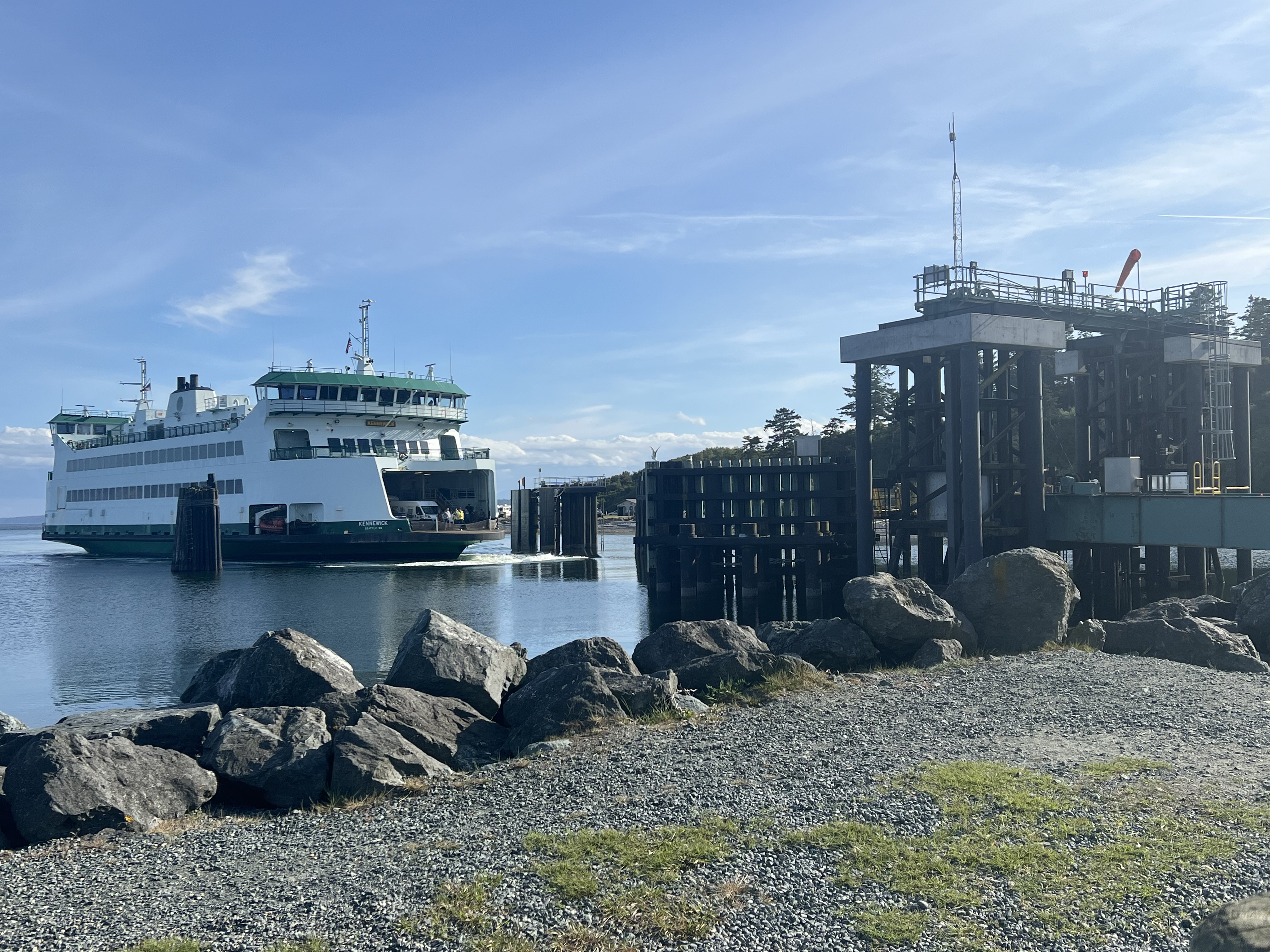
The Port Townsend-Coupeville ferry doesn’t actually land in Coupeville but at Keystone Harbor five miles away. The first ferry of the day leaves Port Townsend at 6:30 am and the Coupeville terminal at 7:15 am. Intervals between services at either terminal is about 90 minutes. The last weekday ferry leaves Port Townsend at 8:30 pm and Coupeville at 9:10 pm, returning to Port Townsend for the night and refueling. On summer weekends (Fri, Sat, and Sun, and holidays with the exception of July 4th), the last ferry leaves Port Townsend at 10:00 pm and Coupeville at 11:40 pm. The ferry schedule is here.
Round trip ferry fares are $10 for adults age 19-64 and $5 for seniors and people with disabilities. Add $1 for bikes. Young folks 18 and under and their bikes ride free. Pay at the ferry terminal ticket booth with cash, credit, or your ORCA card. See details.
At both terminals on the Port Townsend-Coupeville route, cyclists wait in the designated area on the right side of the ramp to the ship. Before vehicles load, you walk your bike onto the ferry, ride it to the forward end of the empty car deck, and park it out of the way. Then you’re free to explore the upper decks of the boat, before the call for passengers to return to their cars and bikes. On arrival, bike riders are the first to ride off.

I was taking photos of the cars rolling off the ferry while waiting to be the first to board the ferry, when a motorist offered to take my photo. After the last car had disembarked, I was instructed to walk my bike onto the ferry and then ride through the empty car deck.

After parking my bike out of the way at the forward end, I went up to the passenger deck and watched the cars embark.
If you arrive at the ferry as vehicles are being driven on, wait near the bike racks. You board just before the late walk-ons, park your bike at the rear of the boat, and disembark last.

After the vehicles were all on the ferry, the latecomers boarded. Individual cylists and families parked their bikes at the rear of the ferry. Pedestrians followed.

If your bike is parked at the rear of the ferry, you wait for the vehicles to disembark before riding off over the empty car deck.
Greeting you on arrival at Keystone Landing on Whidbey Island is the Fort Casey State Park beach campground.

In breeding season, great blue heron often build their nests among the pilings of the ferry dock.

From here opens the bird-filled lagoons of Ebey’s Landing National Historical Reserve through which you ride to Coupeville.

Beyond the lagoons lie the protected prairies and historic farms of the Ebey Reserve. Getting to Coupeville by bike is the heart of this trip.
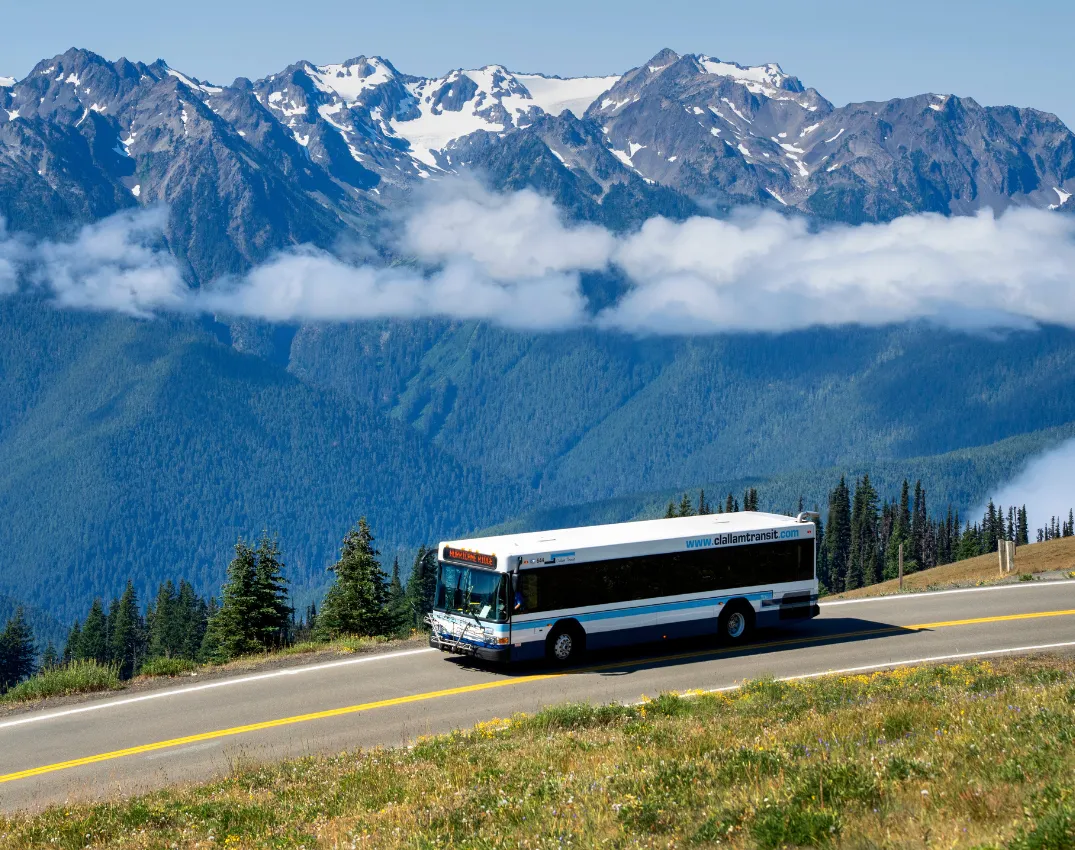
Still, you’re likely to find an Island Transit bus waiting as you leave the ferry. Should you want to get a head start on your trip, have time to ride well beyond Coupeville, and save the Keystone Landing-Coupeville segment for the end, load your bike and get on. Here’s how to put your bike on the bus, or in the bus. Island Transit busses are free for you and your bike. Route #6 serves the ferry terminal with 12 trips each way on weekdays and 8 on Saturdays and Sundays. Bus schedules are here.
TripHighlights
Fort Casey State Park is a 467-acre marine camping park with sweeping views of Admiralty Inlet and the Strait of Juan de Fuca. It’s open every day except Wednesday from 9am to 8 pm and later on weekends. Consider leaving your visit to Fort Casey for later in your ride to more easily coordinate with your return ferry trip. And should you miss a ferry or desire shelter from th elements, Callen’s Restaurant is a stone’s throw from the ferry terminal.
Ebey’s Landing National Historic Reserve is a unique federal-local conservation partnership to preserve the historic and scenic integrity of Central Whidbey Island. This protected area of native prairies is home to remaining structures of the earliest settlements as well as thriving contemporary farms.

Prairie Center Market is located at the intersection of Terry Road and the main drag into Coupeville. You will see its colorful produce stands as you cycle through a picturesque rural hamlet. Open 365 days a year, the market offers a range of services, including restrooms open to all visitors.
Coupeville was founded in 1850 and is considered the second oldest town in Washington. It’s a small friendly place with lots to explore and the home to annual events where islanders gather. These include the Penn Cove Musselfest in early March, the Coupeville Arts & Craft Festival during the second weekend in August, and the Practically Magic Halloweekend in late October.
The Coupeville Chamber of Commerce and Visitors Center is on NW Alexander Street across the street from the Coupeville Public Library. Information on shops and dining and the cycling guide are available even when the center is closed. Public restrooms are in the parking lot just up the hill as well as at the library.
North Central Whidbey Farmers Market comes alive on Fridays and Saturdays throughout the summer and early fall. Farm families and craft people set up their stalls on Coupeville Green and are open for business from 10 am to 2 pm.
The Waterfront is lined with small businesses and eateries. Park your bike, walk the narrow sidewalks and explore the nooks and crannies of old buildings.
The Coupeville Wharf on Penn Cove has been a center of economic life since its construction in 1905. A large grain warehouse from the period contains a coffeeshop, maritime exhibits, and kayak rentals. Visiting boats moor here as does the century old Schooner Suva.

Price Scultpture Forest Ride a mile and a half east out of town to walk the trails of this lush second growth forest which is studded with large works of art. Located at 678 Parker Road, the site is open 365 days a year from 8 am until 7 pm or sunset, depending on the season. Admission is free.
Pacific Rim Center for Environmental Stewardship Ride east another mile and a half beyond the Sculpture Forest to reach the campus center at 180 Parker Road. In partnership with scientific and academic institutions, tribes, governments, and nonprofits, PRI conducts rigorous field research to promote ecological restoration through the cultivation and distribution of native plants and seeds. Beyond the campus center, trails lead to fields, forests, oak savannah, and research sites on the 175 acre property, which is open and free to the public from dawn to dusk.
Fort Ebey State Park lies north east of Coupeville and features views over Admiralty Inlet and the Strait of Juan de Fuca. Ride south on Main Street to where a footbridge takes you over the busy State Route 20. Then continue on the bike path that follows the highway along geographically intriguing Kettles. Thirty-miles of hiking trails offer access to the depressions caused when the Vashion Glacier retreated, flattening the land and allowing the area spectacular views of the Olympics and the Cascades. After 2.2 miles along the Kettles, the paved track takes you northeast through Fort Ebey State Park. Car-free visitors do not need a Discover Pass to use Washington State Parks.


Consider printing these maps. The Legend at the left with road types and widths of shoulders is from the first map listed here:
Beyond these singular landscapes within easy cycling of the Coupeville ferry landing, cyclists can embark on scenic routes around Whidbey and Camano Islands, which together comprise Washington’s Island County. Plan other cycling adventures using these resources and maps or jump on an Island Transit bus to follow one of these Visit the Islands! itineraries.

Leave a Reply